Want to buy a Russian Blue kitten? 99 answers covering prices, inclusions, reserving, Australia-wide delivery and verifying any breeder before you pay a deposit.
This page brings together the questions Australian families ask most when they buy a Russian Blue kitten – prices and deposits, what is included, current availability, reserving and waitlists, Australia-wide delivery, how to verify a breeder, and health, paperwork and the first weeks at home. Every answer links to a detailed guide where you want to go deeper. Our kittens are $2,500 with a $250 deposit, vet-checked, vaccinated, microchipped, desexed, socialised in a family home, and delivered Australia-wide — all included when you buy a Russian Blue kitten. If your question is not answered here, contact us and we will be happy to help.
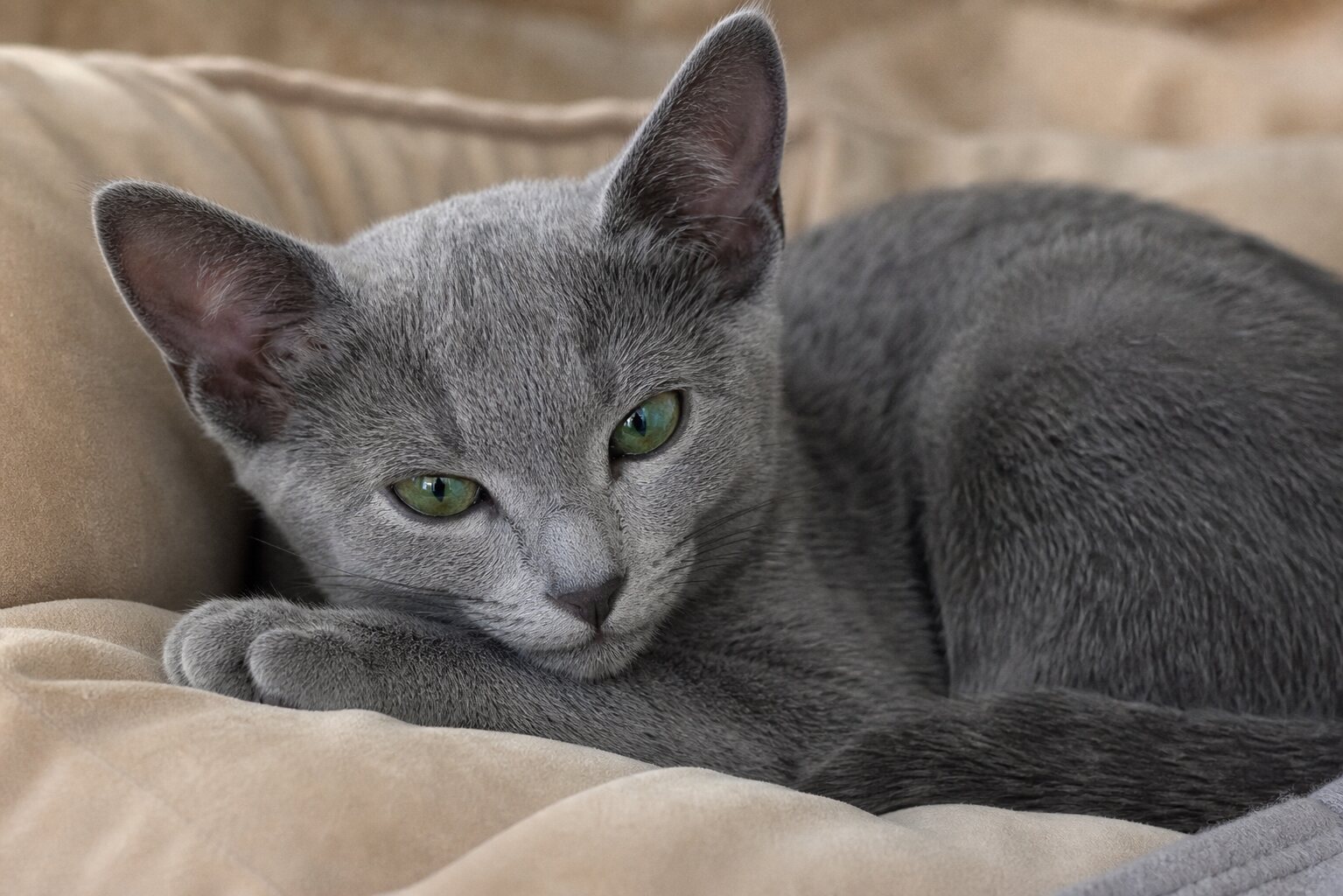
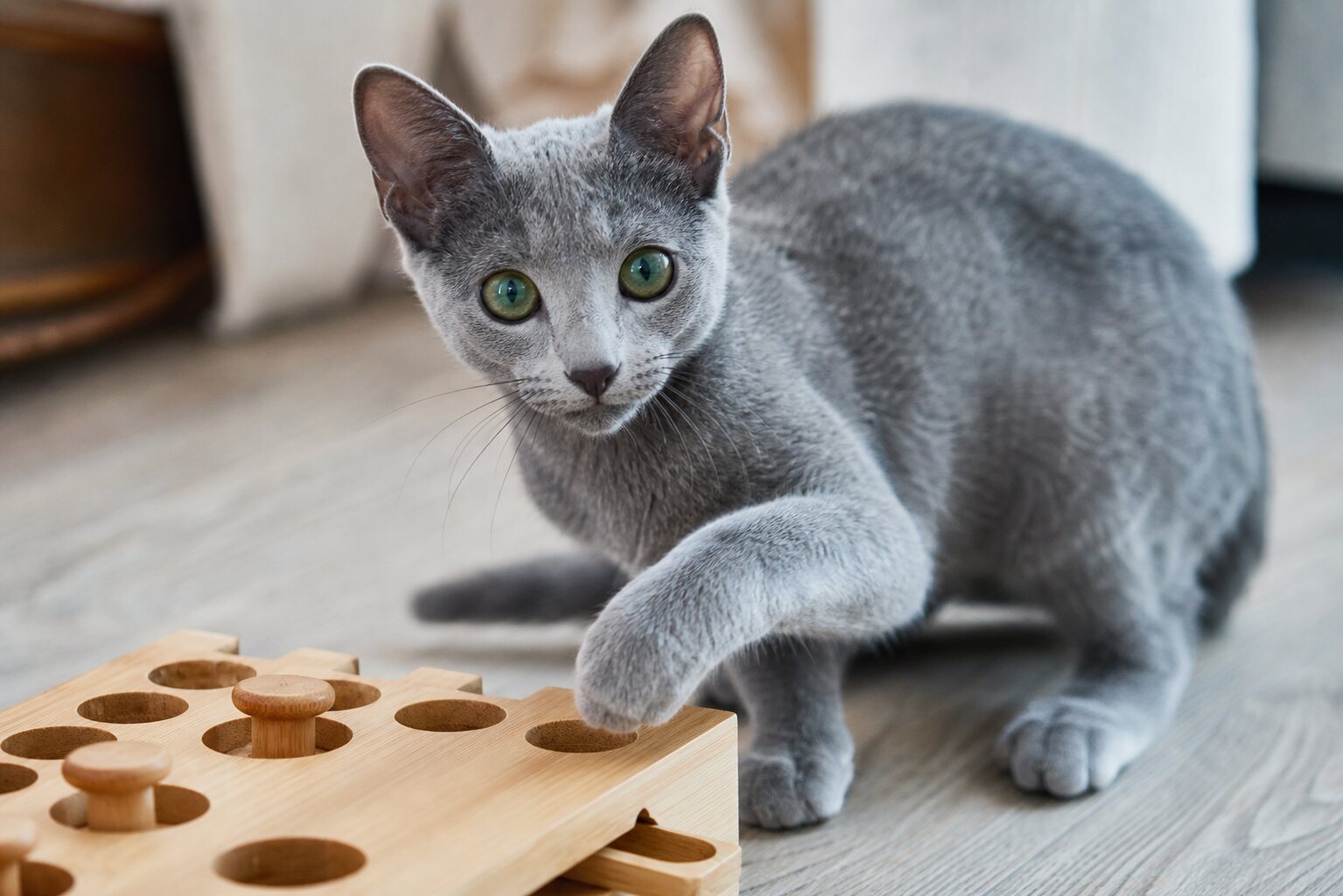
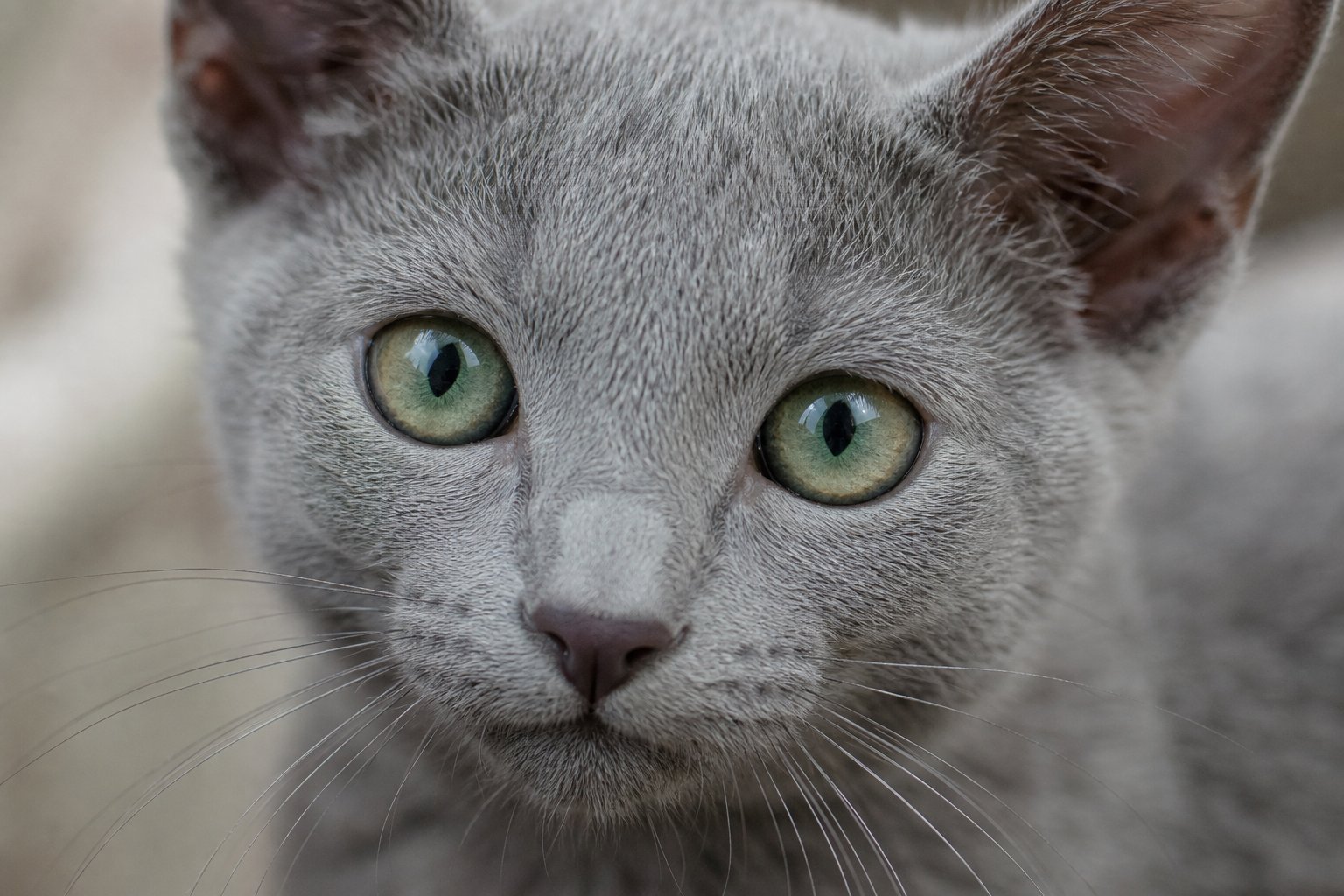
Their plush silver-blue coat, striking emerald-green eyes and famously gentle, loyal temperament make them one of the most loved family cats in the world.
Yes. They are patient, calm and affectionate, making them wonderful companions for respectful children and busy family homes.
No cat is truly hypoallergenic, but the Russian Blue’s dense double coat sheds less and may be easier for some allergy sufferers to live with.
Adults are medium-sized and elegant, typically 3.5–6 kg, with a muscular, graceful build.
Yes. Russian Blues are sociable and usually integrate beautifully with cat-friendly dogs and other cats when introduced gently.
No. All kittens are born with blue eyes, and a Russian Blue’s eyes change gradually through shades of blue, grey and yellow before settling on their adult green, usually by around four months of age. The intensity of the green continues to deepen for some time after that. You can read more about the breed in our guide to Russian Blue temperament.
They do. Newborn kittens are often born with faint ‘ghost’ tabby markings in their coat, which fade completely as they mature. The distinctive silver-tipped sheen on the guard hairs also develops with age, so an adult’s coat looks quite different from a young kitten’s. Our grooming guide explains how the coat develops.
Less than most breeds. Their short, dense double coat traps loose hair rather than releasing it into the home. They still shed — no cat is shed-free — but a weekly brush is usually enough, rising to two or three times a week during spring and autumn shedding. See our grooming and shedding guide for the full routine.
They are famously quiet. Russian Blues have a soft voice and tend to communicate with chirps and trills rather than loud, persistent meowing, which is one of the reasons they suit apartments and townhouses so well. Read more in our temperament guide.
It varies by individual, but the breed tends to prefer sitting beside you rather than being held. Most are deeply affectionate on their own terms. Kittens handled gently and often from an early age are generally more comfortable being picked up as adults. Our temperament guide covers this in detail.
Simply enquire and we’ll help match you with the right kitten. A $250 deposit secures your place when you buy a Russian Blue kitten, and we guide you all the way to homecoming.
At 12–14 weeks — fully weaned, socialised, litter-trained and vet-checked, ready for their forever home.
Absolutely. We match each kitten’s temperament to your lifestyle so it’s a perfect fit for your family.
Yes — regular photos and videos so you can watch your Russian Blue kitten grow from the moment you reserve.
Yes. A $250 deposit secures a Russian Blue kitten or a place on our waitlist for upcoming litters.
Yes. Our kittens are raised underfoot in a family environment and handled daily from an early age, so they arrive confident, socialised and comfortable with ordinary household life — including the vacuum cleaner. Early handling is covered in our kitten socialisation guide.
We will tell you exactly what your Russian Blue kitten has been eating before they leave. We recommend keeping them on that same food for at least the first week, as changing diet at the same time as changing house is a common cause of an upset stomach. If you do want to change it, transition gradually over seven to ten days. Choosing a diet is covered in our guide to the best kitten food in Australia.
Yes. We can arrange collection, and we recommend it where distance allows because it gives you the chance to meet us, ask anything you like, and see where your Russian Blue kitten was raised. If you are interstate, we can arrange delivery instead. Our collection day checklist covers what to bring and expect.
A secure cat carrier is essential, along with a towel or blanket to line it. It also helps enormously to bring something that smells of the cattery, such as a small blanket from your Russian Blue kitten’s bedding — it makes the first night far calmer. See the full collection day checklist.
Yes, where possible. Meeting the mother and seeing how the kittens have been raised is one of the most useful things you can do before committing, and we would encourage you to ask this of any breeder you are considering. This is one of the questions in our guide to choosing a breeder.
Yes. Every kitten receives its F3 vaccination covering cat flu and enteritis before going home.
Yes. All kittens are microchipped and receive a final veterinary health check with sign-off.
A litter tray, food and water bowls, a scratching post, a cosy bed and a few toys. We’ll send you a complete starter guide.
Yes — they are confidently using the litter tray before they leave us.
Yes. We provide lifelong advice and support, long after your Russian Blue kitten has gone home.
Every kitten is vet-checked, F3 vaccinated, microchipped and wormed before going home, and each one leaves with a written health record. We will go through that record with you so you know exactly what has been done and when. Read our kitten vaccination schedule for Australia.
Yes. The core vaccination course runs across several weeks and is not complete when a Russian Blue kitten leaves. Take your Russian Blue kitten’s health record to your own vet and they will plan the remaining vaccinations for you. Full timing is in our vaccination schedule guide.
They are a naturally robust breed without the exaggerated physical features that cause problems in some pedigree cats. The health issues most worth watching for are the ones that affect all cats — particularly weight gain, dental disease and urinary problems — and all three are largely preventable with good diet, dental care and regular vet checks. More detail is in our guide to Russian Blue health.
Every kitten is health-checked before leaving us and comes with a written health record, and we provide a health guarantee. Please ask us for the full terms in writing before you commit to anything, so you know exactly what is covered. Our guide to cat purchase contracts explains what to look for.
Contact your vet promptly. Kittens can deteriorate quickly, and two things should always be treated as urgent: a Russian Blue kitten who has not eaten for 24 hours, and any straining or inability to urinate. Please also let us know — our aftercare support lasts for the life of your cat. Our health guide lists the warning signs to watch for.
Kittens are $2,500 each, with a $250 deposit to secure your kitten or waitlist place.
Yes. We arrange safe, comfortable Australia-wide delivery through trusted, pet-experienced providers.
All states and territories across Australia.
Yes. Visits can be arranged so you and your kitten can meet and make sure it’s the perfect match.
Ethical breeding, small litters, home-raised kittens, full vet care and lifelong support — your kitten’s health and happiness always come first.
Every kitten is vet-checked before leaving us, F3 vaccinated, microchipped and wormed, and comes with a complete health record and our lifetime aftercare support. Our kittens are $2,500, with a $250 deposit to secure your kitten or your place on the waitlist. A full breakdown is in our guide to Russian Blue kitten costs in Australia.
We explain our deposit terms in full, in writing, before you commit to anything, and we are happy to send them to you so you can read them properly at home. Just ask. Read our guide to kitten deposits and waitlists.
Beyond the kitten, most Australian owners spend somewhere between $1,000 and $2,000 a year on a healthy cat. That covers food, litter, annual veterinary care and parasite prevention, plus equipment such as a carrier, litter tray, scratching post and bedding when you are starting out. Our cost guide sets out the full picture.
Yes. We deliver Australia-wide, covering all states and territories. Please get in touch to talk through the arrangements for your location. Planning ahead? See our guide to travelling interstate with your cat.
Yes. Where your kitten is travelling to you, we keep you updated throughout the journey. Talk to us about the arrangements for your location and we will explain exactly how it works. Our interstate travel guide covers the practicalities.
Straight answers on cost, what is included, and how to pay. Every figure below is current for Australia in 2026.
Our kittens are $2,500 each, reserved with a $250 deposit. Across Australia, pedigree Russian Blues from registered catteries generally run $1,500 to $2,500, with premium and show lines higher. Full detail is in our 2026 price guide and prices by state.
A full veterinary health check, F3 vaccination, microchipping with registration lodged, worming and parasite treatment, litter training, and daily socialisation in a family home from birth, plus registration paperwork and lifetime aftercare. See what is included when you buy a pedigree kitten and where a $2,500 price actually goes.
Deposit terms are set out in writing before any money changes hands, and refundability depends on why the sale does not proceed. We will always tell you the position up front rather than leaving it to the contract fine print. Deposits and payment options explained covers the Australian norms.
We take a $250 deposit to reserve, with the balance due before collection day. Some Australian breeders offer staged payments across the weeks before collection – always confirm in writing that the kitten is not released until fully paid. Payment options and what to negotiate instead of a discount.
Desexing is standard in our program and is a significant inclusion – a private desex costs $200 to $450 in Australia, more for a female. Always confirm desexing status in writing with any breeder before comparing prices. What Australian owners should know and the vet checks to verify.
Yes, and it is set out in your written contract before you pay a deposit. The three things to check in any guarantee are the veterinary examination window, the length of hereditary cover, and what the remedy actually is. Health guarantees explained covers how to read one properly.
Because most classified “Russian Blue” kittens are grey domestic shorthairs or crossbreeds without pedigree documentation, health-tested parents, a contract, or completed veterinary work. Add the $540 to $1,580 of catch-up vet costs to a cheap kitten and the gap narrows considerably. Why cheap kittens cost more and Russian Blue versus grey moggy.
Pedigree prices are usually fixed, because the breeder has already spent most of it. What is often available: reduced prices on older kittens, retired breeding adults and pet-quality placements, plus added value like a second vaccination before collection or transport contribution. The honest answer on negotiating.
Somewhat. Western Australia, South Australia, Tasmania, the ACT and the Northern Territory have fewer registered catteries, so local prices can be lower where available – but supply is limited and many buyers purchase interstate instead. Prices by state and finding a breeder near you.
For the first few years, usually yes – because kitten accidents are common and unpredictable, and premiums are lowest while the cat is healthy with no recorded conditions. Australian cover runs about $35 to $75 a month. Cat insurance explained and first-year vet costs.
Roughly $4,000 to $5,500 for a Russian Blue kitten including purchase price, setup, food, litter, insurance and veterinary care – or $1,400 to $3,200 if you adopt an adult. Then $90 to $170 a month ongoing. The full first-year breakdown and monthly running costs.
Whether we have kittens now, how to reserve one, and how long you might otherwise wait.
Our current litter is listed on available kittens, with an individual profile for each on our kittens page. This matters more than it sounds: most registered Australian catteries are booked out months ahead, so genuine current availability is worth checking first. What “available now” really means.
Seven steps: enquire with details about your household, ask your questions, see the kitten on video or in person, get the terms in writing, pay the $250 deposit, prepare your home, then collect or arrange delivery. The full step-by-step process and our adoption process.
Six to eighteen months is typical at registered catteries, and several are currently booked into the following year. Small litters, a twelve-week minimum age before kittens can go home, and limited breeder numbers all drive it. Waitlist reality explained.
Yes, through a waitlist deposit. Before paying, confirm in writing that it converts to the purchase price, what happens if the litter does not produce the sex or colour you wanted, and whether you can transfer your place to a later litter. Deposits and waitlists.
Yes – ask us to add you. Reserved kittens do occasionally become available again when a placement falls through, and cancellation lists sometimes produce a Russian Blue kitten within weeks rather than months. It costs nothing to join. The available-now alternatives.
Typically within days if a Russian Blue kitten is available and you are collecting locally, or one to two weeks if interstate transport needs arranging. Kittens do not leave before twelve weeks, which is a welfare minimum rather than a delay. Why the age matters. For independent interstate pet-transport welfare guidance, see RSPCA Australia’s cat care resources.
Sometimes. Retired breeding adults and young cats that did not suit the breeding program are placed periodically, and they are consistently undervalued – pedigree, fully vet-worked, exceptionally well socialised, with a known temperament, usually at a much reduced fee. Adopting a retired breeder cat.
We will tell you immediately and your deposit is protected – it transfers to another kitten, to a future litter, or is refunded, according to what you prefer and what is set out in writing beforehand. This is exactly the situation a written agreement exists for. Health guarantees and what to do if a kitten is unwell.
We deliver Australia-wide. Here is how it works, what it costs, and how to keep it safe.
Yes. We deliver to every state and territory, and we quote transport separately and in writing so your total cost is fixed before you commit to anything. Delivery information and delivery across Australia.
Roughly $200 to $550 by road and $250 to $750 by air including an IATA-compliant crate and pre-travel veterinary certificate, depending on distance and route. Buying from another state has the full cost table.
Yes, when done properly: a direct flight, an IATA-compliant crate sized so the kitten can stand and turn, a current veterinary health certificate, no sedation, and morning travel in summer to avoid weather embargoes. Flying a kitten interstate covers the airline rules in detail.
Yes, and we welcome it – a day trip is usually enough, and it lets you meet us and see the environment in person rather than on video. Bring a secure crate and an absorbent pad. Collection day checklist and choosing a travel crate.
A rigid, ventilated, IATA-compliant crate sized so the kitten can stand, turn around and lie down naturally, with an absorbent base, a mounted water dish, secure door latching, and clear live-animal labelling. Crate guide explains sizing and setup.
You will have the transport booking details, the carrier’s contact and the expected arrival window, so you can follow the journey and be at the collection point on time. We confirm handover arrangements with you before travel. Delivery information.
Airlines refuse live animal cargo in extreme heat or cold, which can delay a booking by several days in an Australian summer. We plan morning travel, avoid forecast extremes, and rebook promptly – and we will always tell you rather than leaving you guessing. Build two or three days of slack into your plans. Weather embargoes explained.
Never pay transport money to a third party you have not dealt with directly and cannot independently verify. A legitimate breeder either includes transport in their quote or names a real company you can contact yourself. The delivery-fee scam explained and kitten scams in Australia.
You should check any breeder properly before paying a deposit. Here is how to check us.
Ask for the pedigree certificate showing registered parentage, the microchip number matching the paperwork, and the full veterinary records. Physical checks help too: silver-tipped dense double coat, no white markings anywhere, mauve-pink paw pads, slate nose, wedge head, and blue or transitional eyes at twelve weeks – not adult green. Real pedigree versus lookalike.
We operate a registered breeding program to recognised association standards with clear records, and we will tell you which feline body we are registered with and provide the details in writing. Ask any breeder this question directly – a registered one answers in a sentence. What registration means for buyers and about our cattery.
Yes to both. We will happily do a live video call showing the kittens, the mother and the environment, and you are welcome to ask us to show something specific on the call so you know it is live. What a good cattery visit looks like and contact us.
Yes, always. Seeing the queen is one of the most informative things a buyer can do – her temperament, condition and where she lives in the house tell you a great deal about how the kittens are being raised. A breeder who will not show the mother is a breeder to walk away from. What to look for.
Registration and pedigree paperwork, veterinary records covering health check, vaccination, microchip number and parasite treatment, your written purchase contract including the health guarantee, and a starter guide. Registration papers explained, contract checklist and what is included.
Reverse image search the photos, insist on a live video call showing the mother, verify the registry independently, ask for the veterinary practice name and telephone it, get a written contract before paying, and pay only by bank transfer to the breeder’s own name. 14 listing red flags and buying online safely.
Our process, what we ask, and what we commit to if your circumstances ever change.
Yes, and we will give you a straight answer rather than just selling to you. Adopting from a rescue costs $150 to $400 with the same core veterinary work included, and a retired breeder cat gives you pedigree plus a known temperament at a reduced fee. Adopting versus buying and where to look.
A conversation rather than a long form, but we do need to know: who is in your household, children and their ages, other pets, whether you rent and if your lease permits cats, whether the cat will be indoors, your working hours, your location and whether you need delivery, and your timing. What breeders ask and why and our process.
Yes. Our agreement requires you to contact us first if you can ever no longer keep the cat, at any point in its life. That clause is not control – it is the safety net that keeps our cats out of shelters, and it is a good sign in any breeder’s contract. Rehoming a Russian Blue properly.
Periodically, yes. Retired queens and studs, and young adults who did not suit the breeding program, are placed into screened pet homes with full veterinary histories and pedigree paperwork, usually at a substantially reduced fee. Adopting a retired breeder cat and why adults are a smart choice.
Often better than a kitten. You get a known temperament rather than a forecast, no destructive kitten phase, established litter habits, lower cost, and latent health conditions already surfaced. The trade-off is a slower bond – expect one to eight weeks. The full case for adults.
Written landlord permission if you rent, agreement from everyone in the household, a realistic first-year budget, a veterinary practice chosen and registered, and the basics bought – crate, litter trays, bowls, food, a sturdy scratching post. The 30-point checklist and the starter kit.
The honest answers, including where this breed is the wrong choice.
Yes – they are among the better apartment breeds. Not high-energy, not destructive, quiet rather than vocal, and content with vertical space, window access and two daily play sessions. Apartment suitability and indoor enrichment.
An adult copes with a normal working day well, given enrichment – a window perch, vertical space, food puzzles, clean litter and two play sessions daily. A kitten under six months should not be left all day. If your house is empty nine hours daily, consider two kittens or an adult. The full answer.
Two is often genuinely better, particularly in a working household – they provide each other the social contact and play you cannot supply during the day, and they are not twice the work. Two from the same litter are already bonded. The honest case for two.
Generally yes, with a proper slow introduction – scent first, then visual, then supervised contact, over one to two weeks. The breed’s confidence and the dog’s temperament matter more than the species combination. Introducing a kitten to a dog.
With respectful, older children, yes. With very young children who grab and carry, this breed is often a poor fit – they are reserved and will retreat rather than tolerate it. A Ragdoll or a sturdy adult domestic cat is usually better in that household. Russian Blues and children and family suitability.
We recommend indoors with contained outdoor access. Indoor cats live substantially longer and avoid traffic, snakes, paralysis ticks, fights and FIV. A catio, secured verandah or cat-proofed fence delivers most of the outdoor benefit at a fraction of the risk. The full decision guide.
Less difference than most buyers expect. Both are affectionate and quiet. Females are often slightly smaller and more independent; males often slightly larger and more overtly sociable. Individual personality matters far more than sex. Male versus female.
No, and any listing claiming otherwise is misleading. They produce somewhat less of the Fel d 1 allergen than some breeds and shed a fine coat that is easier to manage, which helps some mild allergy sufferers – but no cat is hypoallergenic. Spend time with the breed and take medical advice before committing. The honest answer.
What has been done, what you need to do, and what to expect at home.
Inside your health guarantee window – commonly 48 to 72 hours after collection. Book the appointment before collection day, because missing the window can void your cover even if the illness began with the breeder. What happens at the first visit and guarantees explained.
F3 covering cat flu (herpesvirus and calicivirus) and feline enteritis (panleukopenia), with the first dose given before collection. You will receive a signed certificate with product and dates, and will need to schedule the second dose and later boosters. The Australian schedule.
Get the 15-digit chip number and the database name in writing on collection day, then complete the ownership transfer online with that registry within the week. A chip still registered to the breeder protects nobody if your cat is found. How to transfer ownership.
A rigid travel crate, two litter trays and the litter the breeder uses, shallow wide bowls, the same food, a tall sturdy sisal scratching post, a bed, a few toys, an enzyme cleaner, and basic grooming tools. Roughly $400 to $700 for a genuinely good setup. The starter kit and the supplies checklist.
A complete premium kitten diet, measured rather than free-fed, with wet food at least once daily for moisture. Continue exactly what the breeder feeds for the first week, then transition over seven to ten days if you change. There is no breed-specific food requirement. What to feed and choosing kitten food.
Toxic plants first – lilies are fatal, including pollen in water. Then string, elastic, hair ties and ribbon, which cause surgical emergencies. Then windows, balconies and escape routes, chemicals, cords, and small ingestible objects. Roughly $80 to $400 in products. Room by room and preparing your home.
Most show their real personality within one to two weeks, though some take four. Expect hiding on day one, tentative exploration by day two or three, and normal behaviour by the end of week one. Keep the kitten to one quiet room initially and let it set the pace. The first week and the first 30 days.
Go to a vet immediately if you see lethargy, repeated vomiting, bloody diarrhoea, pale gums, laboured breathing, or straining to urinate with nothing passed – that last one is a life-threatening emergency in male cats. Otherwise call your vet the same day, notify us in writing, and keep every record. The first 48 hours.
We would love to hear from you. Get in touch or browse our available kittens to find your perfect match.
Contact UsView Available KittensStill have a question before you buy a Russian Blue kitten? Please contact us and we will be glad to help you feel fully informed and confident about welcoming a kitten into your home.
Prepare one quiet room with a bed, litter tray, food, water, a scratching post and somewhere to hide, and let your kitten start there before gradually exploring the rest of the house. Our room-by-room checklist covers everything you need to buy and make safe. Use our room-by-room home preparation checklist.
Kittens are social and do not do well left alone for long stretches every day. If you are out full time, two kittens are usually a kinder choice than one — they keep each other company and entertain each other. We are happy to discuss whether a pair would suit your household. Our guide to whether to get two kittens covers this properly.
Slowly. Start with your kitten in a separate room, swap bedding so each animal gets used to the other’s scent, then allow contact through a door before any face-to-face meeting. Always supervise early sessions and give your kitten somewhere high to retreat to. Never rush this. Our step-by-step guide to introducing a kitten to a dog works for other cats too.
Most kittens are eating, playing and using their tray confidently within a few days, and are fully at home within a few weeks. Giving them one quiet room to start with, and letting them set the pace, is the single thing that speeds it up. See our first week plan for a day-by-day approach.
Guides to help you decide whether a Russian Blue is right for your family.
What a Russian Blue kitten costs in Australia, what is included, and the ongoing costs to budget for.
No cat is truly hypoallergenic, but Russian Blues are often easier for allergy sufferers. Here is why.
The questions that separate an ethical breeder from the rest. Use this checklist before you commit.
The most common pedigree kitten scams in Australia, the warning signs in listings, and how to protect your money before you pay a deposit.
Why breeders ask for a deposit, what a waitlist actually means, and the questions to ask before you commit any money.
When kittens are usually desexed, why it matters, and the questions to ask your breeder about their desexing policy.