
Retired breeder cats are the most undervalued animals in Australian cat ownership. They are pedigree adults, raised in a family home, handled since birth, fully vet-worked, with a complete documented health history and a known temperament – and they are usually placed at a fraction of a kitten’s price.
Quick answer: Retired breeder cats — here’s the short version. Looking for a kitten now? Browse our Russian Blue kittens for sale — home-raised and health-guaranteed.
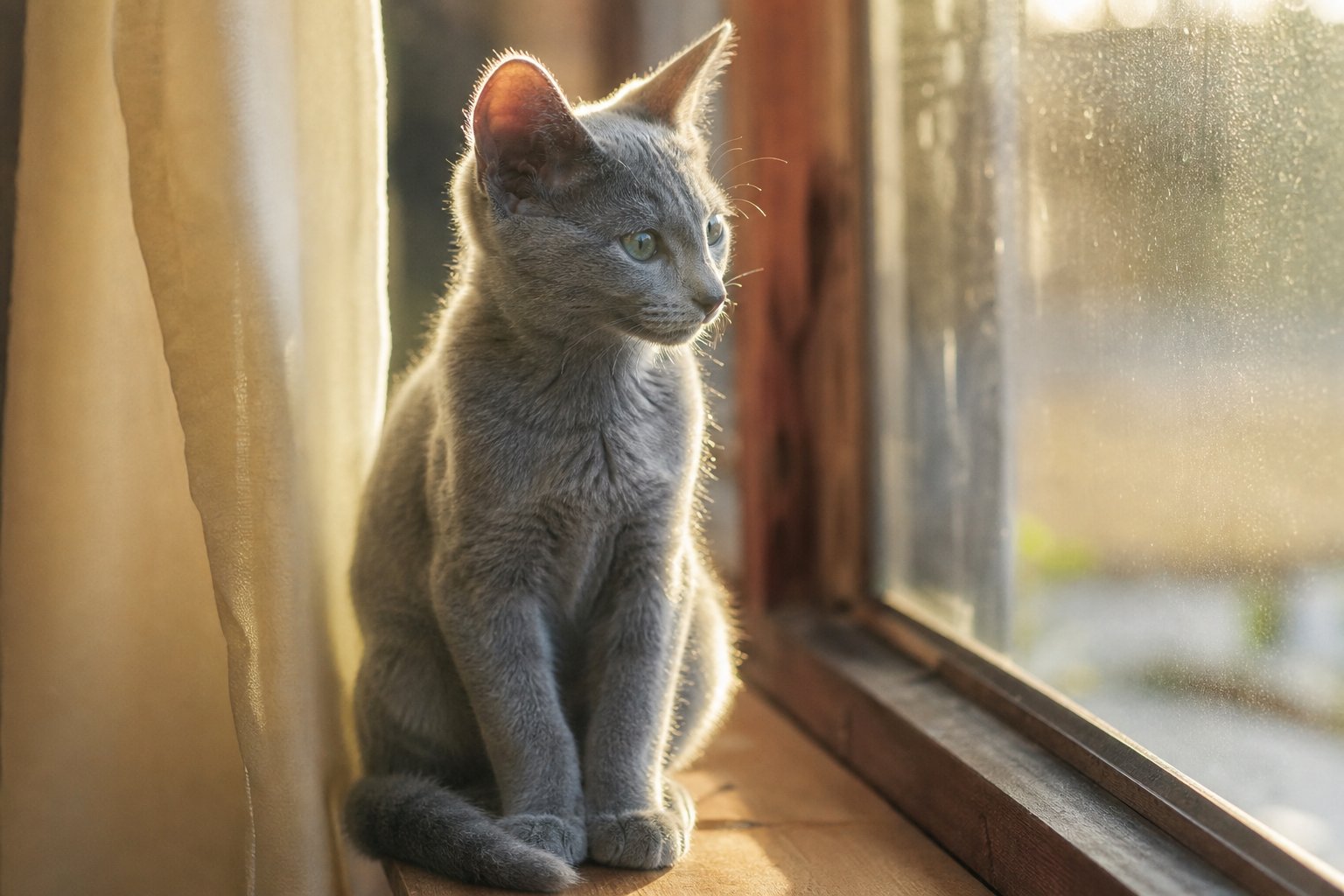
Why catteries place adult cats
- Retirement from breeding. Queens typically breed for a limited number of litters and are then retired, often at four to seven years old. Ethical breeders do not keep breeding indefinitely.
- Program size. A cattery keeps a limited number of cats. As new bloodlines come in, older cats are placed into pet homes rather than kept in a crowded environment.
- Cats that did not suit breeding. Some young adults have temperaments better suited to a single devoted family than to a breeding program – shy cats, cats who dislike other adults, cats who are not interested in showing.
- Returned cats. Owners whose circumstances changed, returned under the contract clause that requires it. These cats have full histories and are often placed quickly.
- Cattery winding down. Retirement, illness, or a decision to stop breeding. In these cases several cats may be placed at once, which is the best opportunity for adopters.
What you get
| Retired breeder cat | Typical shelter adoption | Kitten from breeder | |
|---|---|---|---|
| Pedigree documentation | Yes, usually with full ancestry | No | Yes |
| Health history | Complete, from birth | Partial or unknown | Partial – parents tested, kitten young |
| Parent health testing | Documented | None | Documented |
| Socialisation | Exceptional – handled daily from birth in a family home | Variable | Exceptional |
| Temperament | Known and observed over years | Assessed over weeks | Forecast |
| Desexing | Usually already done, or done before placement | Done | Usually included |
| Vaccination | Current | Current | Partial series |
| Typical Australian fee | $150 – $600 | $150 – $350 | $1,500 – $2,500 |
What to expect in the placement process
Catteries screen retired cat placements more carefully than some kitten sales, because these are cats the breeder has lived with for years and cares about specifically. Expect:
- An application or detailed conversation. Household, children, other pets, housing tenure and whether cats are permitted, indoor or outdoor, working hours. What breeders ask and why.
- A home assessment or video call.
- A rehome or retirement fee. This covers the veterinary work done and is a screening filter, not a profit.
- A placement agreement. Covering indoor-only requirements, veterinary care standards, and usually a clause requiring the cat be returned to the cattery if you can no longer keep it.
- Full records handed over. Veterinary history, pedigree certificate, microchip details, diet and routine notes.
- A settling-in period with support. Good catteries follow up.
Questions to ask the breeder
- How old is the cat, and why is it being placed?
- How many litters has the queen had, if applicable?
- What is the full health history – any conditions, treatments, surgeries, pregnancies with complications?
- Has the cat been screened for hereditary conditions, and what were the results?
- What is the cat’s temperament – how is it with children, dogs, other cats, visitors, handling?
- Is the cat desexed, vaccinated, microchipped, and are the records available?
- What does the cat eat, and what litter does it use?
- Is the cat indoor-only, and is that a requirement of the placement?
- Are there any known fears, anxieties or behavioural quirks?
- What does the placement agreement require, and will the cattery take the cat back if it does not work out?
- How will the transition be managed, and can I visit before committing?
- What support do you offer afterwards?
Question 9 is the one most adopters skip and most need. Every cat has quirks, and knowing them in advance is the difference between a manageable adjustment and a failed placement.
The transition: what is different about a retired breeder cat
These cats have lived in a specific environment for years, often with other cats, in a busy cattery household. The change is real for them.
- One quiet room for at least a week. Not the whole house. Litter, food, water, a hiding place, a window if possible.
- If the cat has always lived with other cats, solitude can be difficult. Ask the breeder whether the cat would benefit from companionship. Some retired cats do noticeably better with another cat present.
- Maintain the exact diet initially, then transition over 7 to 10 days if changing.
- Maintain routine. Feeding times, interaction patterns. Adults cope through predictability.
- Expect hiding for one to three weeks. Normal. Do not force interaction.
- Introduce other pets slowly, scent first. Introducing to a dog and Russian Blues and children.
- Book a vet check in week one to establish your own baseline and relationship with a practice.
Preparing your home applies to adults too, and the first 30 days has a useful structure even for an adult placement.
Health considerations specific to retired breeding cats
- Queens may have had multiple pregnancies. Ask about any complications and current body condition. Most recover fully and are in excellent condition at retirement.
- Entire cats placed without desexing – uncommon but possible – should be desexed promptly. What Australian owners should know.
- Dental status. Ask when the last dental assessment was. Middle-aged cats commonly need attention. Dental care at home.
- Weight. Retired cats often gain weight once breeding activity stops. Healthy weight.
- Cardiac screening. Ask whether the cat has had any cardiac assessment. Russian Blue health.
- Senior considerations if the cat is over eight. Senior cat care.
How to find them
- Contact catteries directly and ask to be added to their adult placement list. Many keep informal lists and do not advertise publicly.
- Watch cattery social media, where adult placements are often posted before websites are updated.
- Ask breed club contacts, who hear about cattery wind-downs through the network.
- Check breed-specific rescue organisations. Where to look.
- Ask breeders you are already in contact with, even if you were on a kitten waitlist – they will often tell you when an adult becomes available.
Why this route is underrated
You get a pedigree cat with a complete health history, exceptional socialisation and a known temperament, for a fraction of a kitten’s price, with none of the kitten phase. The only cost is patience while the cat settles – and you would have that with any adoption.
Quick answers
How old are retired breeder cats usually?
Commonly four to seven years old for retired queens and studs. Young adults placed because they did not suit breeding may be one to three.
How much does it cost to adopt a retired breeder cat?
Typically $150 to $600 in Australia. The fee covers veterinary work already done and acts as a screening filter.
Are retired breeding cats healthy?
Generally very. They have had consistent veterinary care, documented histories, and are usually placed in excellent condition. Ask about any pregnancy complications and current dental and weight status.
Will a retired breeder cat bond with me?
Yes, though expect one to three weeks of adjustment. These cats are exceptionally well socialised, which works in your favour, but they are leaving a familiar environment.
Related reading
Retired Breeder Cats: FAQs
How much does it cost to act on this?
When readers ask about retired breeder cats, the budget question comes first: our Russian Blue kittens are $2,500 with a $250 deposit, vet-checked and fully documented — see current Russian Blue kittens for sale.
Where can I find a Russian Blue to adopt?
For retired breeder cats, try breed rescues, shelters and cattery adult placements — see where to look in Australia.
What should I do next about retired breeder cats?
Read our 99 kitten-buying FAQs, then enquire — we reply within 24 hours and will happily talk through retired breeder cats for your situation.
Independent guidance: The RSPCA can help with adoption and rehoming options across Australia.
Ready to meet your kitten?
Our Russian Blue kittens are raised in our family home, vet-checked, vaccinated, microchipped, wormed and socialised before they travel. We reserve with a $250 deposit and deliver Australia-wide.