
This is one of the most practical questions a buyer can ask, and it is often decided by optimism rather than evidence. The honest answer differs sharply between a kitten and an adult, and depends on what you leave behind.
Quick answer: Can a russian blue be left alone — here’s the short version. Convinced the breed suits you? Meet our Russian Blue kittens for sale — each with a known personality.
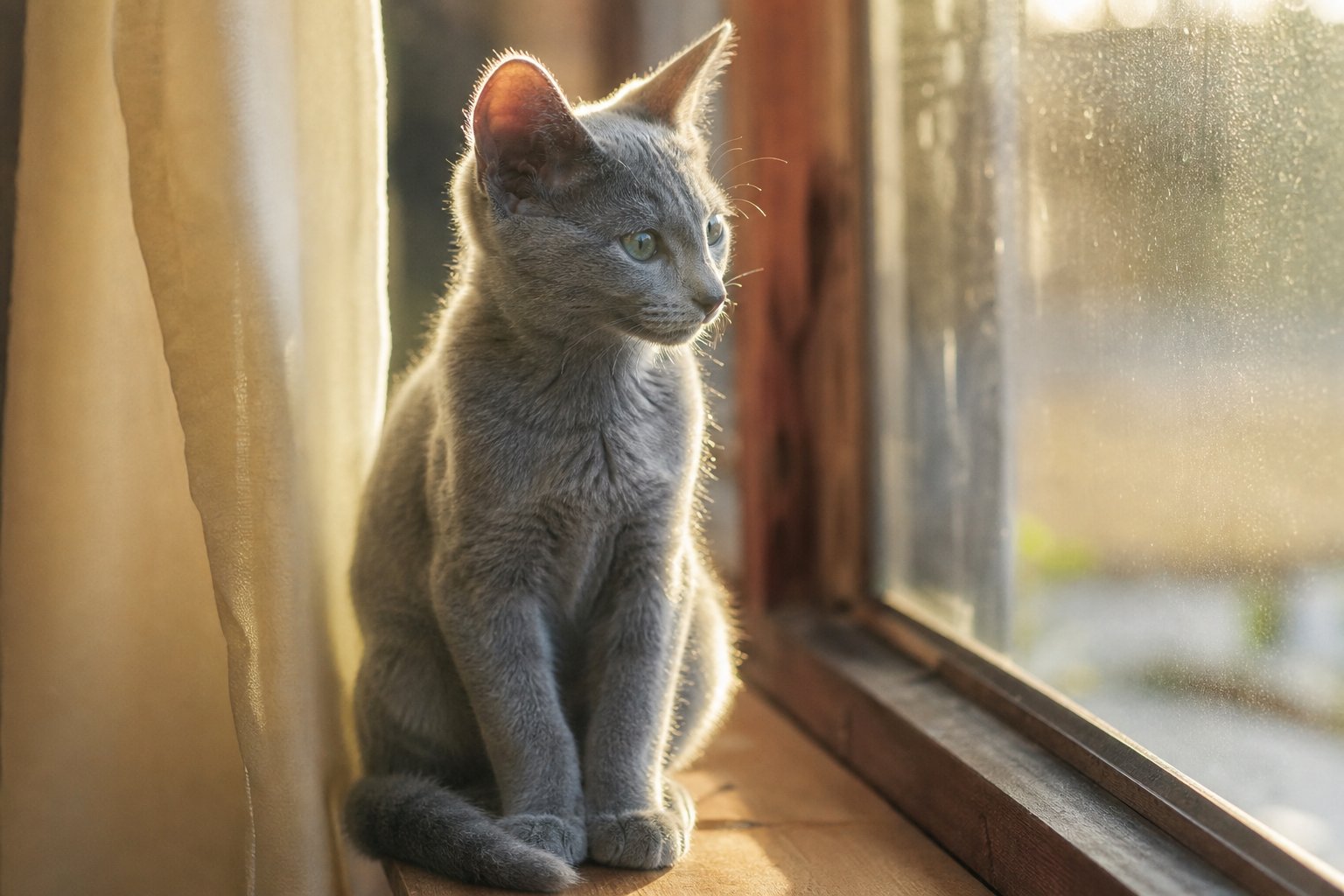
How long is reasonable?
| Age | Maximum sensible time alone | Notes |
|---|---|---|
| 8 – 12 weeks | 2 – 4 hours | Needs feeding three to four times daily, supervision, and ongoing socialisation |
| 3 – 6 months | 4 – 6 hours | Still developing; long absences risk behaviour problems and missed socialisation |
| 6 – 12 months | 6 – 8 hours | Increasingly independent, but still benefits from a midday break |
| Adult (1 – 7 years) | 8 – 10 hours | A normal working day is generally fine with proper setup |
| Senior (8+ years) | 8 hours, with monitoring | May need medication, more water access, or earlier feeding |
A standard Australian working day of eight to nine hours away, plus commute, means a cat alone for nine to eleven hours. For an adult that is tolerable. For a kitten it is not.
Why the breed matters here
Russian Blues are often described as independent, which is partly true and partly misleading:
- They do tolerate solitude better than some breeds. A Siamese or Oriental left alone all day will frequently become vocal and distressed. A Russian Blue generally will not.
- But they bond intensely. The same trait that makes them devoted makes prolonged absence harder for them than for a more casually social cat.
- They are sensitive to routine change. Consistent departure and return times help considerably.
- They are intelligent and easily bored. An unenriched environment plus a long absence is the combination that produces problems.
- They often greet you intensely on return. Owners describe a cat waiting at the door – which is affection, but also indicates the day has been long for them.
Russian Blue temperament covers the breed profile in full.
The setup that makes a working day viable
- Window access with a view. A perch at a window with outdoor activity is worth more than any toy. This is the single highest-value item.
- Vertical space. Cat tree, shelves. A floor-only environment is dull from a cat’s perspective. What is worth buying.
- Food puzzles left out. Some of the day’s food ration delivered through puzzle feeders extends the hunting sequence across hours rather than minutes.
- Water in more than one place.
- Clean litter. A full day alone means at least one, ideally two trays. Litter guide.
- Toys rotated. A few out at a time, swapped regularly.
- Two substantial play sessions daily – one before you leave, one after you return. Fifteen minutes each with a wand toy. Exercise needs.
- Predictable routine. Same departure and return times where possible, same feeding times.
- Something with your scent. A worn t-shirt left on the bed.
- Comfort in your absence. Some cats settle better with background noise or a covered bed in a quiet corner.
Keeping your cat safe indoors covers the full enrichment program.
The second cat question
For a household where both adults work full time, two cats is often genuinely the right answer rather than a compromise:
- They provide each other with the social contact and play you cannot supply during the day
- Two cats are not twice the work – litter and feeding scale, but attention and play largely do not
- Two cats are not twice the cost – food and litter rise modestly, vet costs do roughly double
- Kittens raised together or introduced young generally bond well
- The most effective arrangement is two from the same litter, who are already bonded
Should you get two kittens instead of one? makes the full case and covers the cost reality honestly.
Signs your cat is not coping
- Excessive greeting behaviour – frantic, vocal, or clinging on your return
- Destruction, particularly around doors and windows
- Litter tray accidents that are new – always rule out urinary disease with a vet first. Behaviour problems.
- Over-grooming, bald patches, or psychogenic alopecia
- Vocalising, particularly at night or dawn
- Loss of appetite or overeating
- Lethargy and withdrawal rather than the expected sleep
- Aggression on your return, or towards other pets
- Pacing or repetitive behaviour
Any of these warrant a veterinary check first, because several have medical causes. If medical causes are excluded, the answer is usually more enrichment, more play, or a companion.
Practical options for long days
- Come home at lunch. Twenty minutes of interaction and a play session transforms the day. Not always possible, but the highest-value intervention.
- A cat sitter or neighbour drop-in. Once midday, for feeding, litter and fifteen minutes of play.
- Automatic feeder and water fountain. Breaks up the day with a food event and keeps water fresh.
- Work from home some days. Even two days a week changes the picture substantially.
- A second cat. Often the best structural solution.
- Adjust expectations. If your household genuinely cannot support a kitten, an adult cat copes far better – why an adult is a smart choice.
Kittens and working households specifically
If you work full time and want a kitten, be realistic. A kitten under six months needs:
- Multiple small meals across the day
- Supervision – kittens get into danger that adults do not
- Continued socialisation, which happens through exposure, not through solitude
- Play and interaction for development
- Litter monitoring while habits establish
The workable arrangements are: time off for the first two to four weeks, a midday visitor, a household member with different hours, or two kittens who keep each other company. Failing that, an adult cat is the better choice and is not a consolation prize.
The first 30 days and the first week show how demanding the early period actually is.
The honest planning answer
An adult Russian Blue with good enrichment handles a normal working day well. A kitten does not. If your household is empty nine hours a day and you want a kitten, either arrange midday cover, get two, or choose an adult.
Quick answers
Can a Russian Blue be left alone for 8 hours?
An adult, yes, with proper enrichment – window access, vertical space, food puzzles, clean litter and two daily play sessions. A kitten under six months should not be.
Will a Russian Blue get lonely working full time?
Some do. They bond intensely despite their independent reputation. Watch for excessive greeting, destruction, over-grooming or vocalising, and rule out medical causes first.
Should I get two cats if I work full time?
Often yes. Two cats provide each other with the social contact you cannot supply during the day, and are not twice the work. Same-litter kittens bond most easily.
What is the best thing to leave for a cat alone all day?
A window perch with a view, plus food puzzles that spread the day’s ration across hours. Those two items do more than any toy.
Related reading
Can a Russian Blue Be Left Alone All Day: FAQs
How much does it cost to act on this?
When readers ask about can a russian blue be left alone, the budget question comes first: our Russian Blue kittens are $2,500 with a $250 deposit, vet-checked and fully documented — see current Russian Blue kittens for sale.
How do Russian Blues compare to other breeds?
For can a russian blue be left alone context, compare running costs and temperament — see Russian Blue vs British Shorthair for an honest side-by-side.
What should I do next about can a russian blue be left alone?
Read our 99 kitten-buying FAQs, then enquire — we reply within 24 hours and will happily talk through can a russian blue be left alone for your situation.
Independent guidance: Compare breed profiles at TICA’s Russian Blue breed page alongside this guide.
Ready to meet your kitten?
Our Russian Blue kittens are raised in our family home, vet-checked, vaccinated, microchipped, wormed and socialised before they travel. We reserve with a $250 deposit and deliver Australia-wide.