
The honest answer depends on your household, not on the breed. Russian Blues are excellent cats with specific characteristics that suit some people extremely well and disappoint others. Here is the balanced assessment, including the cases where you should buy something else.
Quick answer: Is a russian blue worth it — here’s the short version. Budget beyond the purchase price: our kittens are $2,500 all-inclusive — see what’s available now.
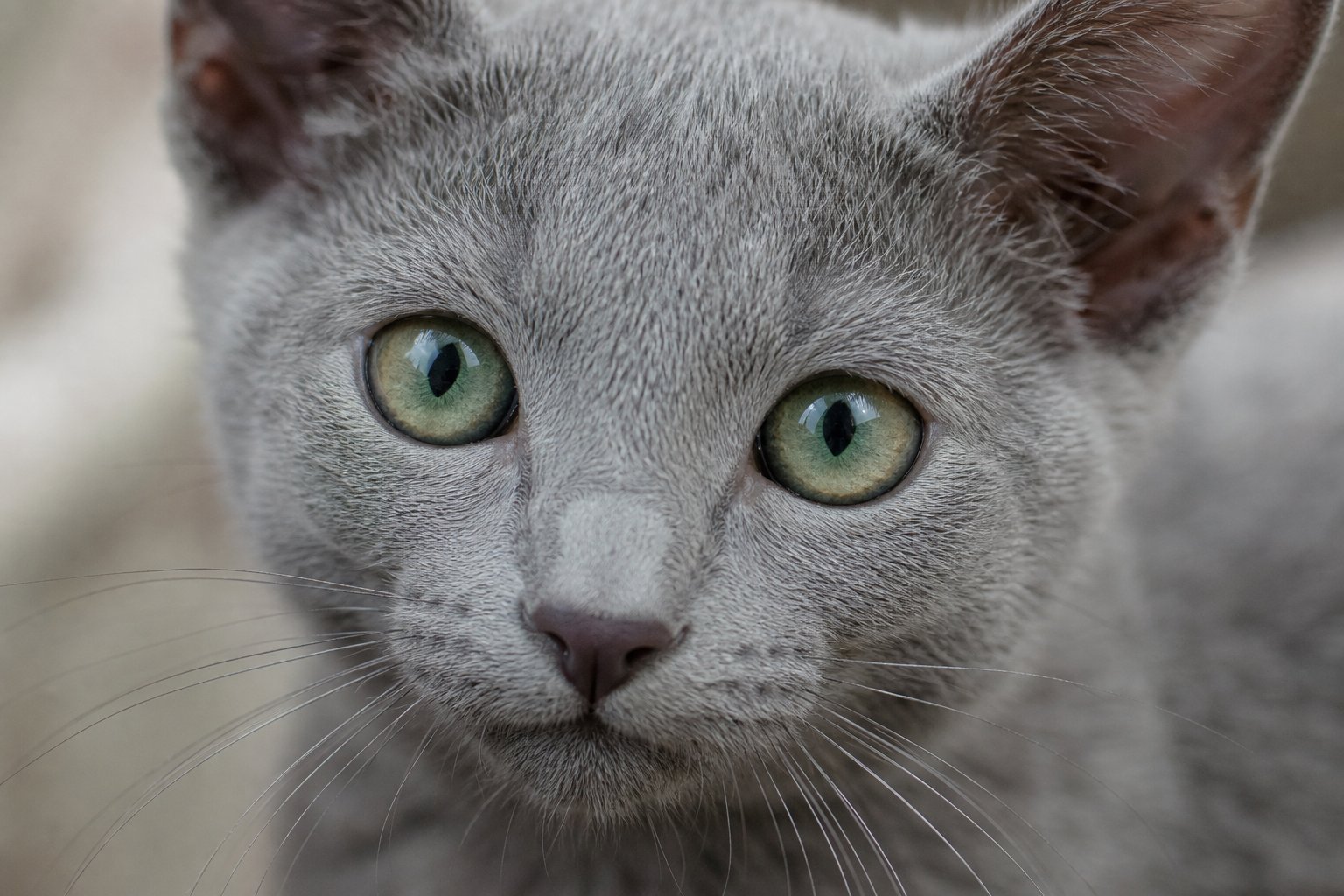
The genuine pros
- Low grooming. A short dense double coat needing a brush once a week. No professional grooming, no matting, no coat emergencies. This is a real fifteen-year saving against a longhair.
- Quiet. Russian Blues are not a vocal breed. They communicate, but rarely at volume or length. If you work from home or live in an apartment, this matters daily.
- Devoted and loyal. They bond intensely, often to one or two people, and follow them around. Owners describe it as dog-like loyalty without dog-like demands.
- Generally robust health. Few breed-specific conditions relative to many pedigree breeds. What to watch for.
- Long-lived. Commonly fifteen years or more, with twenty not unheard of. Lifespan.
- Manageable shedding. They shed, but the fine dense coat lifts off fabric more easily than longer hair. Grooming and shedding.
- Intelligent and trainable. They learn routines, respond to clicker training, fetch, and can be taught boundaries. Training basics.
- Good apartment cats. Not high-energy, not destructive, content with indoor life and moderate play. Apartment suitability.
- Clean and fastidious. Reliable litter users, generally not prone to the litter problems that plague some breeds.
- Predictable. If you buy pedigree, you know broadly what you are getting – which is what the price buys.
The genuine cons
- Reserved with strangers. They typically hide or observe when visitors arrive and may take a long time to warm up. If you want a cat that greets guests, this is not it.
- Often a one-person cat. The intense bond can mean the cat is indifferent to other household members, which is difficult for families.
- Sensitive to change. Moves, new pets, new babies, renovations, and even furniture rearrangement can unsettle a Russian Blue for weeks.
- Can be shy if poorly socialised. The breed’s natural reserve becomes fearfulness without proper early handling – which is precisely why the breeder you choose matters so much. Why the early weeks matter.
- Not a lap cat by default. They prefer proximity to being held. If you want a cat that will sit on your lap for an hour, a Ragdoll is usually a better fit. Russian Blue vs Ragdoll.
- Price and availability. $1,500 to $2,500 plus waitlists of six to eighteen months at many catteries. Waitlist reality.
- Highly imitated. The breed name is widely misused for grey domestic cats, so buying requires verification. How to verify.
- Not hypoallergenic. Often claimed, not true. The honest answer.
Who a Russian Blue suits well
- Quiet households, one or two adults, or a couple with older, respectful children
- Apartment dwellers and people without outdoor space
- People who work from home, or who are home reasonably often
- Owners who want companionship without constant demands
- People who dislike grooming chores
- First-time cat owners who have done the research. Good for first-timers?
- Households that want a predictable temperament and are prepared to pay for it
Who should buy something else
- Very busy, loud, high-traffic households. A Russian Blue will often retreat permanently. Consider a more confident breed or an adult rescue with a known temperament.
- Families with very young children who will grab and carry. A Ragdoll or a sturdy domestic adult copes better. Russian Blues and children.
- People who want an overtly cuddly lap cat. Ragdoll comparison and British Shorthair comparison.
- People who entertain frequently and want a cat that joins in.
- Anyone with a genuine cat allergy. No breed is hypoallergenic. Spend time with the breed and consult a doctor before committing. The allergy reality.
- Households wanting an outdoor roaming cat. Russian Blues are vulnerable outdoors and do best contained. Indoor versus outdoor.
- Buyers on a tight budget. A rescue adult at $250 with the same core vet work is a far better financial decision than stretching for a pedigree kitten. Adopting versus buying.
The cost, honestly
| Cost | |
|---|---|
| Purchase | $1,500 – $2,500 |
| First year total | $4,000 – $5,500 |
| Ongoing monthly | $90 – $170 |
| Lifetime (15 years) | roughly $15,000 – $28,000 |
First-year breakdown, monthly costs and prices by state give the detail. If the lifetime figure is uncomfortable, adopt – it is a better outcome than stretching.
The alternatives worth considering
| If you want | Consider instead |
|---|---|
| A quieter, similar-looking grey cat at lower cost | A grey domestic shorthair from a rescue – often identical in temperament |
| A more cuddly, larger cat | Ragdoll or British Shorthair – comparison |
| A more sociable, talkative cat | Siamese or Oriental – comparison |
| A bigger, more imposing cat | Maine Coon – comparison |
| Another blue-grey pedigree | Chartreux, Korat or British Shorthair blue – the blue breeds compared |
| A pedigree cat at lower cost | A retired breeder cat – why this route is underrated |
| A known temperament without the kitten phase | An adult from rescue – the case for adults |
The verdict
A Russian Blue is worth it if you specifically want what it offers: quiet, loyal, low-maintenance companionship in a robust, long-lived cat, and you can comfortably absorb the purchase price plus fifteen years of care.
It is not worth it as a status purchase, as a first impulse, or as a cheaper substitute for a different temperament you actually wanted. And it is definitely not worth buying from an unverified source at a low price – you will get neither the breed nor the protections. Why cheap kittens cost more.
If you have decided this is the breed for you, see the kittens currently available, read our adoption process, and work through the 30-point checklist before committing.
The test
Ask yourself whether you want this specific temperament, or whether you want a grey cat. If it is the temperament, buy pedigree from a registered breeder. If it is a grey cat, adopt one and save $2,000.
Quick answers
Is a Russian Blue a good first cat?
Often yes – they are robust, low-grooming, quiet and generally healthy, which forgives beginner mistakes. Their reserve means they suit calm households. Full assessment.
Are Russian Blues worth the money?
If you specifically want the breed temperament and can absorb fifteen years of costs, yes. If you mainly want a grey cat, a rescue adult gives you the same appearance for a fraction of the price.
What is the biggest downside of a Russian Blue?
Reserve. They are often shy with strangers, frequently bond to one person, and are sensitive to household change. None of this is fixable by training if it is what you did not want.
Are Russian Blues cuddly?
They are affectionate through proximity rather than being held. Many will sit beside or against you but will not stay on a lap. If a lap cat matters, consider a Ragdoll.
Related reading
Is a Russian Blue Worth It: FAQs
How much does it cost to act on this?
When readers ask about is a russian blue worth it, the budget question comes first: our Russian Blue kittens are $2,500 with a $250 deposit, vet-checked and fully documented — see current Russian Blue kittens for sale.
What is included in the $2,500 price?
For is a russian blue worth it, our price covers vet checks, F3 vaccination, microchip, worming, pedigree paperwork, a starter guide and lifetime support — see where the money goes.
What should I do next about is a russian blue worth it?
Read our 99 kitten-buying FAQs, then enquire — we reply within 24 hours and will happily talk through is a russian blue worth it for your situation.
Independent guidance: Compare with the RSPCA’s figures on the lifetime cost of cat ownership when budgeting for a pedigree kitten.
Ready to meet your kitten?
Our Russian Blue kittens are raised in our family home, vet-checked, vaccinated, microchipped, wormed and socialised before they travel. We reserve with a $250 deposit and deliver Australia-wide.