
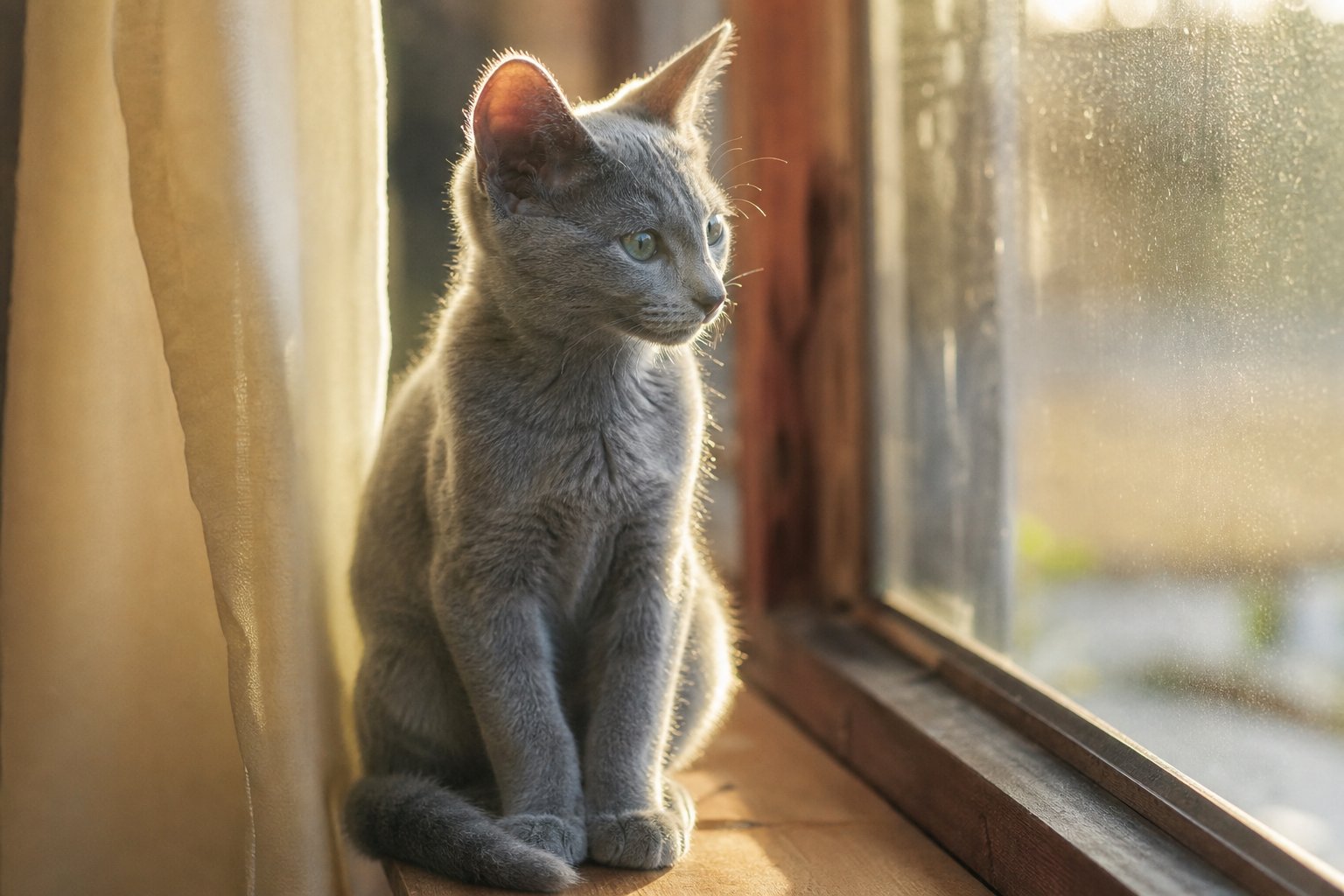
Russian Blues are a long-lived breed. Well-cared-for cats commonly reach their mid-to-late teens, with many living into their late teens and early twenties. Their naturally robust health and lack of extreme physical features work in their favour.
What the lifespan depends on
Breed sets a ceiling; daily care determines where within it your cat lands. The factors that make the biggest measurable difference are:
1. Indoor living
The single largest factor. Indoor cats live substantially longer than cats with outdoor access, because they are not exposed to vehicles, predators, territorial fights, infectious diseases and toxins. If your cat enjoys the outdoors, a secure cat enclosure or a harness gives them the experience without the risk — see our guide to keeping cats safe indoors.
2. Weight
Keeping your cat at a healthy weight is strongly associated with a longer life. Obesity contributes to diabetes, arthritis, heart disease and urinary problems. See our healthy weight guide.
3. Preventive veterinary care
Annual check-ups, and twice-yearly ones once your cat is a senior, catch problems when they are still easy to treat. Dental care matters more than most owners realise — see our dental care guide.
4. Diet
A complete, balanced diet appropriate to their life stage, in the right amount. Our feeding guide covers this by age.
5. Vaccination and parasite control
Staying current on vaccinations and parasite prevention prevents diseases that shorten lives.
6. Desexing
Desexing removes reproductive cancers and infections and reduces roaming and fighting. See our desexing guide.
7. Enrichment and low stress
Chronic stress contributes to a surprising range of feline illness. A predictable routine, vertical space, somewhere to hide and daily play all help.
Life stages
- Kitten: 0 to 12 months
- Adult: 1 to 7 years
- Mature: 7 to 10 years
- Senior: 10 years and over
Cats age faster than many owners expect — a ten-year-old cat is roughly comparable to a person in their fifties. Our senior cat care guide covers what changes as they age.
What we do at the start
A good start compounds over fifteen years. Our kittens are vet-checked, F3 vaccinated, microchipped and wormed before they leave us, and go home with a written health record. Read about our adoption process, or see who is available.
Related Articles
Preparing Your Home for a Kitten: A Room-by-Room Checklist
Everything to buy, move and kitten-proof before your new kitten arrives.
Russian Blue Grooming and Shedding: A Simple Routine
How often to brush a Russian Blue, how to manage seasonal shedding, and the routine that works.
Russian Blue Kitten Feeding Guide: Birth to Adulthood
What to feed a Russian Blue kitten at each life stage, how often, how much, and the mistakes that cause the most problems.
Ready to Meet Your Kitten?
Every kitten from our cattery is vet-checked, F3 vaccinated, microchipped and wormed before leaving us, and comes with a complete health record and lifetime aftercare support.
View Available Kittens Our Adoption Process Ask Us a Question Read the FAQ