
These are close to opposite ends of the cat temperament spectrum, which makes them a useful comparison even if you have already decided on one. Understanding the contrast clarifies what you actually want.
Quick answer: Russian blue vs siamese — here’s the short version. Convinced the breed suits you? Meet our Russian Blue kittens for sale — each with a known personality.
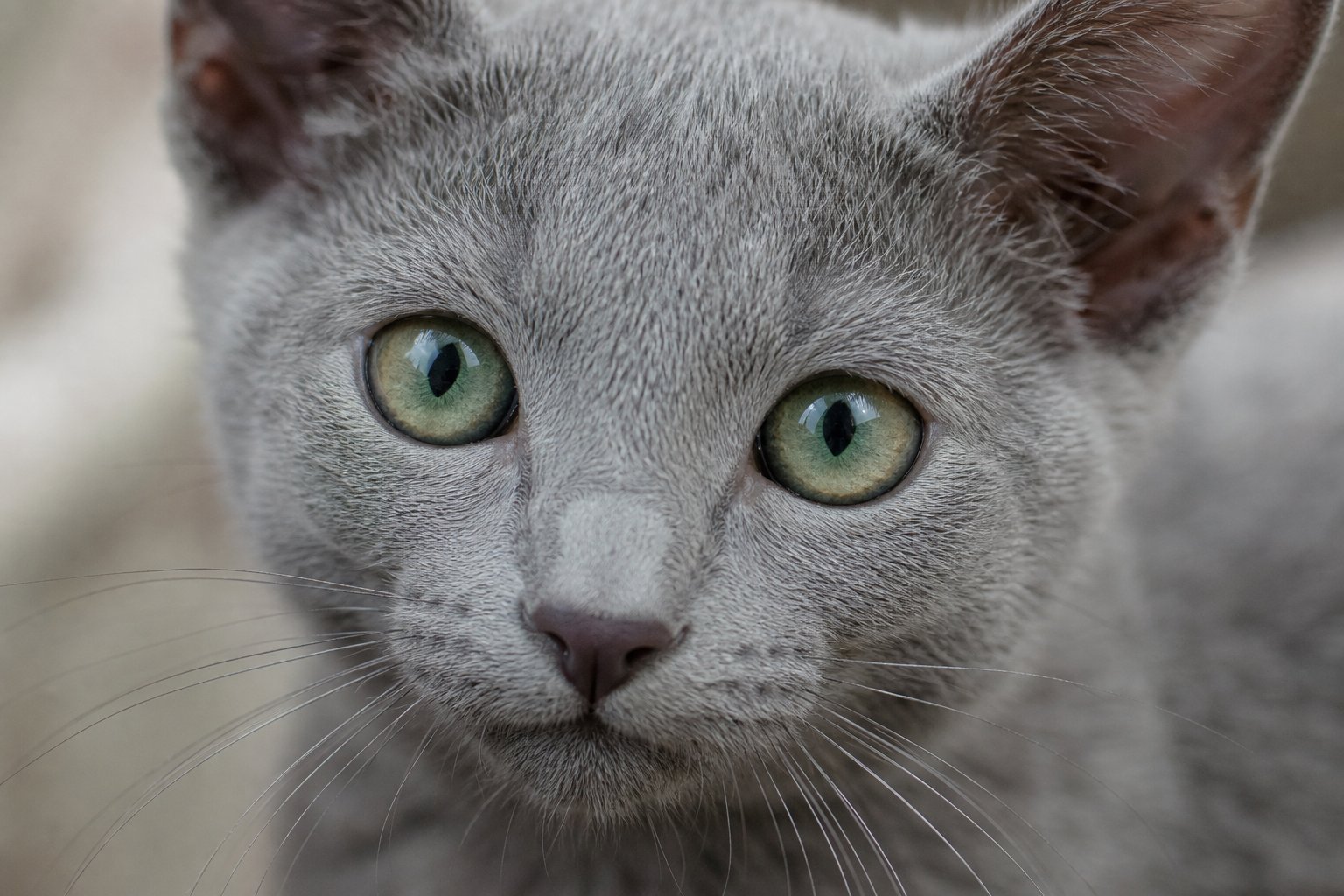
The headline differences
| Russian Blue | Siamese | |
|---|---|---|
| Vocalisation | Quiet – communicates rarely and softly | Very vocal, loud, and conversational throughout the day |
| Sociability | Reserved, bonds to one or two people | Extremely social, demands involvement in everything |
| Strangers | Usually hides or observes | Often greets and investigates |
| Attention needs | Moderate – content with proximity | High – will insist on interaction |
| Tolerance of solitude | Good as an adult with enrichment | Poor – prone to distress and vocalising |
| Coat | Short dense double, silver-tipped blue | Short fine single coat, pointed colouration |
| Grooming | Weekly | Weekly or less |
| Body type | Fine-boned, muscular, elegant | Sleek, tubular, angular, long-legged |
| Eye colour | Vivid green | Deep blue – a breed requirement |
| Purchase price (Australia) | $1,500 – $2,500 | $1,000 – $2,500 |
| Lifespan | 15 – 20 years | 12 – 20 years |
| Key health notes | Generally robust | Amyloidosis, dental disease, some cardiac and respiratory considerations |
Vocalisation: the deciding factor for most people
This is where the two breeds part company most decisively, and it affects your daily life more than any other characteristic.
A Siamese talks. Not occasionally – constantly, at volume, with a distinctive rasping meow, and it expects answers. Many owners find this delightful and describe conversations with their cat. Others find it incompatible with working from home, with sleep, or with close neighbours in an apartment.
A Russian Blue is quiet. It will communicate when it has something to say – usually food or a closed door – and otherwise makes almost no noise. For apartment living, shared walls, home offices and light sleepers, this is a meaningful daily advantage.
Neither can be trained into the other. Vocalisation is a breed trait, not a behaviour problem.
Sociability and independence
Siamese
- Wants to be involved in everything you do
- Will follow you room to room, sit on your keyboard, supervise cooking
- Often distressed when left alone for long – a companion cat is frequently recommended
- Generally confident with visitors and children
- Highly intelligent and easily bored, which becomes destructive without stimulation
- Needs interactive play and mental work daily
Russian Blue
- Wants to be near you, not necessarily on you or involved
- Content to observe from a distance or a favourite perch
- Copes well alone as an adult with proper enrichment. Left alone during the day.
- Usually reserved with visitors, often hiding initially
- Intelligent but less demanding of your attention
- Enjoys play but does not insist on it
If you are out of the house for long hours, a Siamese is generally a poor fit unless you have two. If you are home often and want an interactive companion, a Siamese gives you more. Russian Blue temperament covers our breed’s profile.
With children and other pets
- Siamese generally tolerate busy households better, are more confident with children, and often integrate readily with dogs and other cats. Their tolerance has limits – a Siamese that is handled roughly will say so loudly.
- Russian Blues do well with respectful, older children and in calmer households, but can be overwhelmed by chaos and noise. They typically integrate with a resident cat or a calm dog given a proper slow introduction.
Russian Blues and children, introducing a kitten to a dog and are Russian Blues good family cats cover the detail.
Health
Both are generally healthy, long-lived breeds with fewer problems than flat-faced or giant breeds.
- Siamese considerations: hepatic amyloidosis in some lines, higher rates of dental disease, some cardiac and respiratory conditions, and a predisposition to certain eye problems. Crossed eyes and kinked tails historically occurred and are cosmetic faults.
- Russian Blue considerations: comparatively few breed-specific conditions; cardiac screening in breeding lines is good practice. What to watch for.
- Both: benefit from dental care, weight management and regular veterinary checks. Dental care at home and healthy weight.
Grooming and shedding
Both are short-haired and low-maintenance. The practical difference:
- A Russian Blue’s dense double coat sheds fine hair that lifts off fabric easily and is managed with weekly brushing
- A Siamese’s fine single coat sheds less in volume but the hairs are stiffer and can embed in fabric
- Neither requires professional grooming
- Siamese pointed coats can darken with age and in cooler climates
Grooming and shedding and tools worth buying cover the Russian Blue routine.
Cost and availability
Both sit in a similar price band in Australia, though Siamese are often slightly cheaper at the entry end because there are more breeders and the breed has been established longer. Siamese and Siamese-type cats also appear far more frequently in rescue.
Russian Blues have a smaller registered breeder base and longer relative waits. Prices by state, waitlist reality and kitten cost cover the figures.
Allergies
Neither breed is hypoallergenic. Siamese are sometimes claimed to be better for allergy sufferers because of the short fine coat; there is no reliable evidence for this. Allergen production varies individually far more than by breed. The honest answer on Russian Blues and allergies.
Which should you choose?
- Choose a Russian Blue if you want quiet, you work from home or have close neighbours, you want a devoted but undemanding companion, and your household is calm.
- Choose a Siamese if you want an interactive, talkative, involved cat, you are home often or can get two, and noise is not a problem in your living situation.
- Consider a British Shorthair if you want placid and quiet but stockier and more overtly affectionate than a Russian Blue. Comparison.
- Consider a Ragdoll if you want a large, cuddly, tolerant cat with moderate vocalisation. Comparison.
- Consider a domestic shorthair if budget matters – rescue adults let you assess the actual temperament rather than a breed forecast. The comparison.
If you have decided on a Russian Blue, see our currently available kittens and read the honest pros and cons first.
The one-line test
Could you happily listen to a cat comment on your day, loudly, every day for fifteen years? If yes, a Siamese is available to you. If no, you want a Russian Blue.
Quick answers
Are Siamese more affectionate than Russian Blues?
Differently affectionate. Siamese are overt, demanding and involved; Russian Blues are devoted but express it through proximity. Neither is more loving, but the expression is very different.
Which breed is quieter?
The Russian Blue, by a wide margin. Siamese are among the most vocal of all cat breeds and this is a breed trait that cannot be trained away.
Can a Siamese be left alone all day?
Less well than a Russian Blue. Siamese are prone to distress and vocalising when left alone for long periods, and are often recommended in pairs.
Which is better for apartments?
The Russian Blue – quiet, not high-energy, and content with indoor enrichment. A vocal Siamese in an apartment with shared walls is a common source of neighbour complaints.
Related reading
Russian Blue vs Siamese: FAQs
How much does it cost to act on this?
When readers ask about russian blue vs siamese, the budget question comes first: our Russian Blue kittens are $2,500 with a $250 deposit, vet-checked and fully documented — see current Russian Blue kittens for sale.
Is a Russian Blue right for first-time owners?
Often yes — russian blue vs siamese shows they are gentle, clean and undemanding, though reserved at first. Read the first-timer’s assessment.
What should I do next about russian blue vs siamese?
Read our 99 kitten-buying FAQs, then enquire — we reply within 24 hours and will happily talk through russian blue vs siamese for your situation.
Independent guidance: Compare breed profiles at TICA’s Russian Blue breed page alongside this guide.
Ready to meet your kitten?
Our Russian Blue kittens are raised in our family home, vet-checked, vaccinated, microchipped, wormed and socialised before they travel. We reserve with a $250 deposit and deliver Australia-wide.