
If you want to adopt rather than buy, and you specifically want a Russian Blue, the honest position is that it takes patience. Pedigree Russian Blues rarely enter the general shelter system, because registered breeders are contractually obliged to take their cats back – which is exactly what they do.
Quick answer: Russian blue rescue — here’s the short version. Looking for a kitten now? Browse our Russian Blue kittens for sale — home-raised and health-guaranteed.
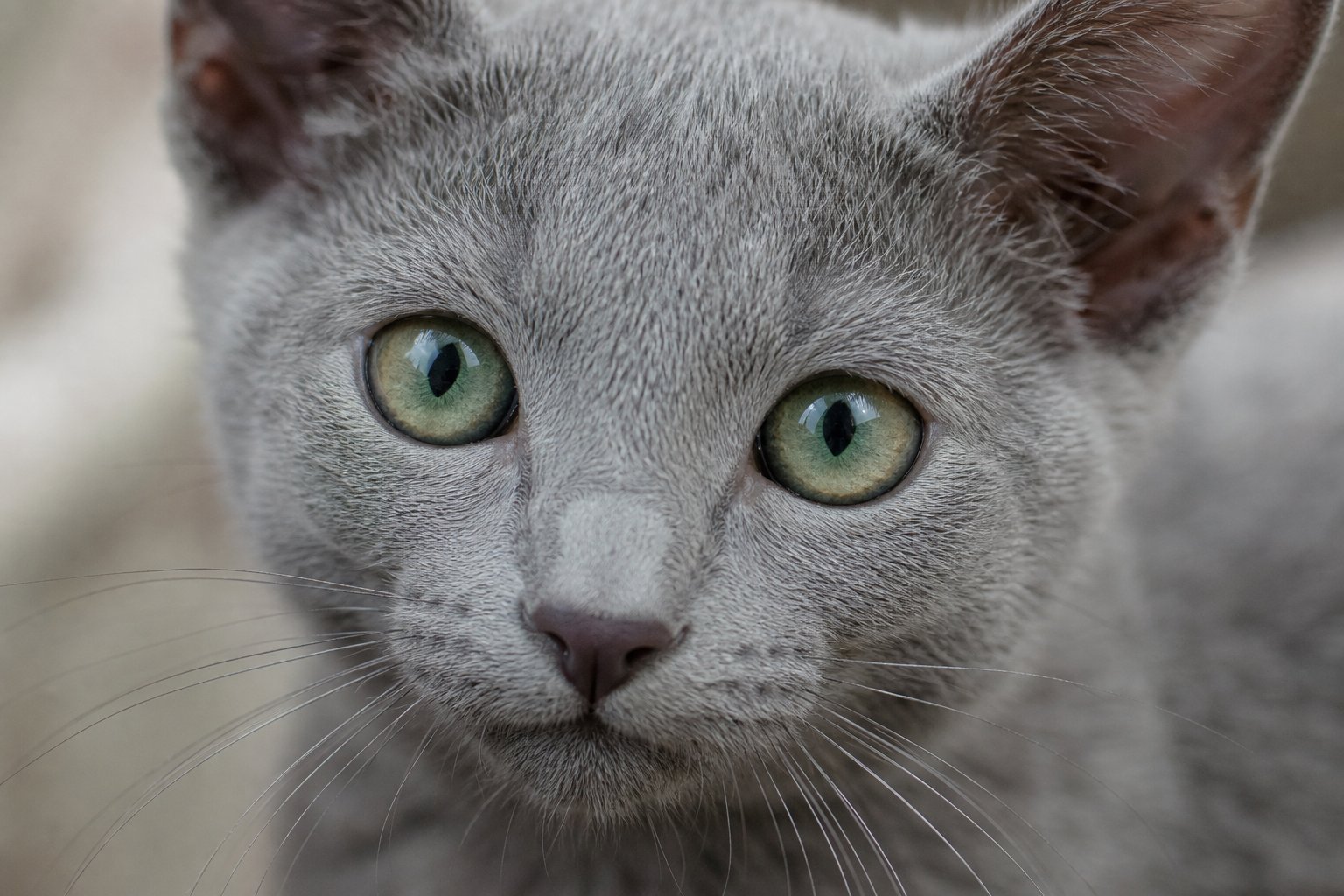
That is good news for the cats and means you need to look in slightly different places.
Where Russian Blues actually come from
1. Cattery placements of retired and young adult cats
This is the strongest route and the least known. Registered catteries periodically place adult cats: retired breeding queens and studs, young adults who did not suit the breeding program, and cats returned under a contract clause. These are pedigree, fully vet-worked, superbly socialised adults with known histories.
- Contact catteries directly and ask to be added to a list for adult placements
- Check cattery websites and social media, where adults are often advertised before kittens
- Ask breed club contacts, who hear about placements through the network
Adopting a retired breeder cat covers this route in detail, including what to expect and what to ask.
2. Breed-specific and pedigree rescue
Australian rescue organisations that specialise in pedigree cats occasionally take Russian Blues and Russian-type cats. They are a small number of organisations and their intake is opportunistic, so:
- Register your interest with each, describing exactly what you want
- Follow them on social media, where animals are often posted before reaching the website
- Be prepared to move quickly – pedigree cats in rescue are adopted within days
3. General shelters and pounds
Russian Blue type cats – grey cats who may or may not have breed ancestry – appear regularly. Most are domestic shorthairs rather than pedigree, which is fine if what you want is a grey cat with a good temperament.
- Set up saved searches with alerts on the major shelter and rescue aggregators
- Visit in person rather than relying only on photos – a grey cat’s temperament is better assessed by handling than by appearance
- Ask staff which cats are described as quiet, reserved and one-person bonded, which is the Russian Blue temperament profile in a domestic cat
Russian Blue or just a grey cat? helps you assess what you are actually looking at, and real pedigree versus lookalike covers the physical tells.
4. Private rehome listings
Owners rehoming their own cat – through platforms, community groups, or a breeder helping a previous buyer. This is where most “Russian Blue” rehomes appear. Approach with care:
- Ask for veterinary records, which show the cat’s history and whether it was ever registered
- Ask why the cat is being rehomed, and ask the same question of a previous vet if possible
- Meet the cat in its current home if you can – behaviour there is more informative than behaviour in a neutral place
- Ask about known health issues, behavioural issues and what the cat is used to
- Expect a rehome fee. A fee of $100 to $300 is normal and indicates the owner is screening; a cat given away free to anyone raises a flag
- Beware of listings that are actually volume sellers. Listing red flags.
What to check when adopting any cat
- Veterinary records. Vaccination history, desexing, microchip number, any treatments and any diagnosed conditions.
- Desexing. Should already be done. If not, arrange it promptly – what Australian owners should know.
- Microchip transfer. The single most commonly incomplete step in an adoption. How to transfer ownership.
- Behaviour assessment. How the cat responds to handling, to noise, to other animals, to children.
- Health examination. Book a vet check within the first week regardless of what the rescue has done – it establishes a baseline and catches anything missed.
- Known history. How long in care, where it came from, why it was surrendered.
What adoption usually costs
| Source | Typical fee | Usually includes |
|---|---|---|
| Major shelter or rescue | $150 – $350 | Desexing, vaccination, microchip, vet check, worming, flea treatment |
| Breed-specific rescue | $200 – $450 | As above, sometimes pedigree paperwork |
| Cattery adult placement | $150 – $600 | Full vet work, pedigree papers, contract, often a health history |
| Private rehome | $0 – $300 | Variable – always ask what has been done |
Compare that with a pedigree kitten at $1,500 to $2,500. Russian Blue adoption fees explained covers what you should expect the fee to include.
Preparing for an adopted adult
Adults settle differently from kittens. They have histories, habits and sometimes fears.
- One quiet room for the first several days, with litter, food, water and a hiding place
- No introductions to other pets for at least a week, then gradual and scent-first. Introducing a cat to a dog.
- Consistent routine – feeding and interaction at predictable times
- Patience with hiding. Some adults take two to four weeks to emerge fully.
- A vet check in week one
- The same food initially, then a slow transition over 7 to 10 days
The first week is written for kittens but the settling principles apply. Preparing your home covers the setup.
If you are rehoming your own Russian Blue
Start with the breeder. Almost every ethical contract requires you to offer the cat back to them first, and they will usually take it. That is the safest outcome for the cat and it is what you agreed to.
If that is not possible, how to rehome a Russian Blue safely covers doing it properly – screening, fees, vet records, and avoiding the outcomes that hurt cats.
The realistic expectation
A pedigree Russian Blue for adoption in Australia is uncommon and goes fast. Register your interest with catteries and breed-specific rescue now, be prepared to move quickly, and consider that a grey domestic cat with a Russian Blue temperament may suit you just as well.
Quick answers
Can I adopt a Russian Blue in Australia?
Yes, but it is uncommon. The best routes are cattery placements of retired breeding adults, breed-specific pedigree rescue, and private rehomes.
Why are Russian Blues rare in shelters?
Registered breeders are contractually obliged to take their cats back if an owner cannot keep them, and they do. That keeps pedigree cats out of the shelter system.
How much does it cost to adopt a Russian Blue?
Between about $150 and $600 depending on source, with cattery adult placements at the higher end because they include pedigree paperwork and full veterinary history.
Are shelter grey cats Russian Blues?
Mostly not. The majority are domestic shorthairs. They can still have the quiet, bonded temperament people want – assess the individual cat rather than the label.
Related reading
Russian Blue Rescue & Rehome Australia: FAQs
How much does it cost to act on this?
When readers ask about russian blue rescue, the budget question comes first: our Russian Blue kittens are $2,500 with a $250 deposit, vet-checked and fully documented — see current Russian Blue kittens for sale.
Should I adopt an adult or buy a kitten?
It depends on your household — russian blue rescue suits people wanting a known temperament, while kittens suit those wanting the full journey. Compare in adopt vs buy.
What should I do next about russian blue rescue?
Read our 99 kitten-buying FAQs, then enquire — we reply within 24 hours and will happily talk through russian blue rescue for your situation.
Independent guidance: The RSPCA can help with adoption and rehoming options across Australia.
Ready to meet your kitten?
Our Russian Blue kittens are raised in our family home, vet-checked, vaccinated, microchipped, wormed and socialised before they travel. We reserve with a $250 deposit and deliver Australia-wide.