
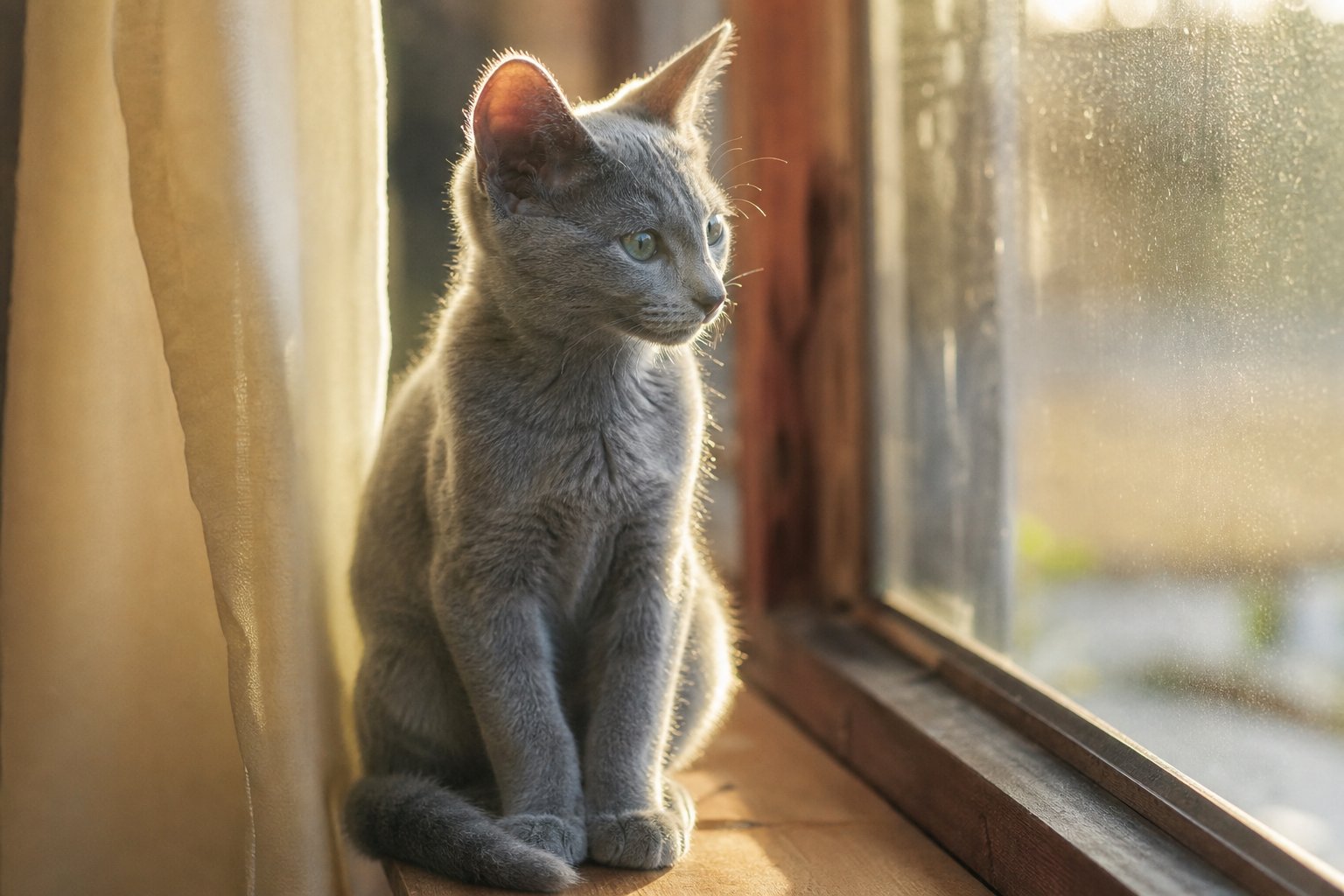
Russian Blues have a dense double coat, and Australian summers are no joke. Their coat does help regulate temperature, but it is not a substitute for sensible care in extreme weather.
Summer: heat is the real danger
Cats cope with heat less well than people, and heatstroke can develop quickly. Watch for panting, excessive drooling, lethargy, vomiting, or bright red gums and tongue — heatstroke is an emergency. Move them somewhere cool, offer water, and contact your vet immediately.
Keeping them cool:
- Provide multiple water stations, and consider a fountain — flowing water encourages drinking
- Keep them indoors during the hottest part of the day
- Close curtains on the sunny side and use fans or air conditioning where you can
- Offer cool tiles or a damp towel to lie on
- Freeze a water bottle and wrap it in a towel for their bed
- Never leave a cat in a car, even briefly and even with windows down
Do not shave them. A cat’s coat insulates against heat as well as cold, and shaving exposes them to sunburn and skin cancer. Regular brushing to remove the undercoat is far more effective — see our grooming guide.
Summer hazards: ticks are far worse in warm months, particularly in eastern Australia — see our parasite guide. Snakes, and windows and doors left open for a breeze, are also seasonal risks.
Winter: warmth and joint comfort
Russian Blues handle cold reasonably well, but they will seek warmth in unsafe places.
- Provide a warm bed away from draughts, ideally off the floor
- Offer a heated cat bed designed for pets, or a microwaveable heat pad made for animals
- Always check under the car bonnet and thump the bonnet before starting the engine in cold weather — cats curl up against warm engines
- Keep fireplaces, heaters and dryers cat-checked before use
- Watch older cats for stiffness in cold weather; warmth helps arthritic joints
- Expect a little more appetite in winter, particularly for outdoor cats
Seasonal shedding
Most cats shed more heavily in spring and autumn as the coat changes. Increase brushing to two or three times a week during these periods — it reduces shedding around the house and prevents matting. Our grooming guide has the full routine.
Indoor heating and cooling cautions
Keep space heaters guarded so they cannot be knocked over or singe a coat. Ensure any heat pad is pet-specific with a chew-resistant cord, and used to instructions. Make sure cats always have a way to move away from a heat source.
More year-round safety advice is in our indoor safety guide.
Related Articles
Preparing Your Home for a Kitten: A Room-by-Room Checklist
Everything to buy, move and kitten-proof before your new kitten arrives.
Russian Blue Grooming and Shedding: A Simple Routine
How often to brush a Russian Blue, how to manage seasonal shedding, and the routine that works.
Russian Blue Kitten Feeding Guide: Birth to Adulthood
What to feed a Russian Blue kitten at each life stage, how often, how much, and the mistakes that cause the most problems.
Ready to Meet Your Kitten?
Every kitten from our cattery is vet-checked, F3 vaccinated, microchipped and wormed before leaving us, and comes with a complete health record and lifetime aftercare support.
View Available Kittens Our Adoption Process Ask Us a Question Read the FAQ