

Both are much-loved pedigree cats with a similar “blue” look, and families considering one often consider the other. They are, however, quite different cats to live with.
Quick answer: Russian blue vs british shorthair — here’s the short version. Convinced the breed suits you? Meet our Russian Blue kittens for sale — each with a known personality.
At a glance
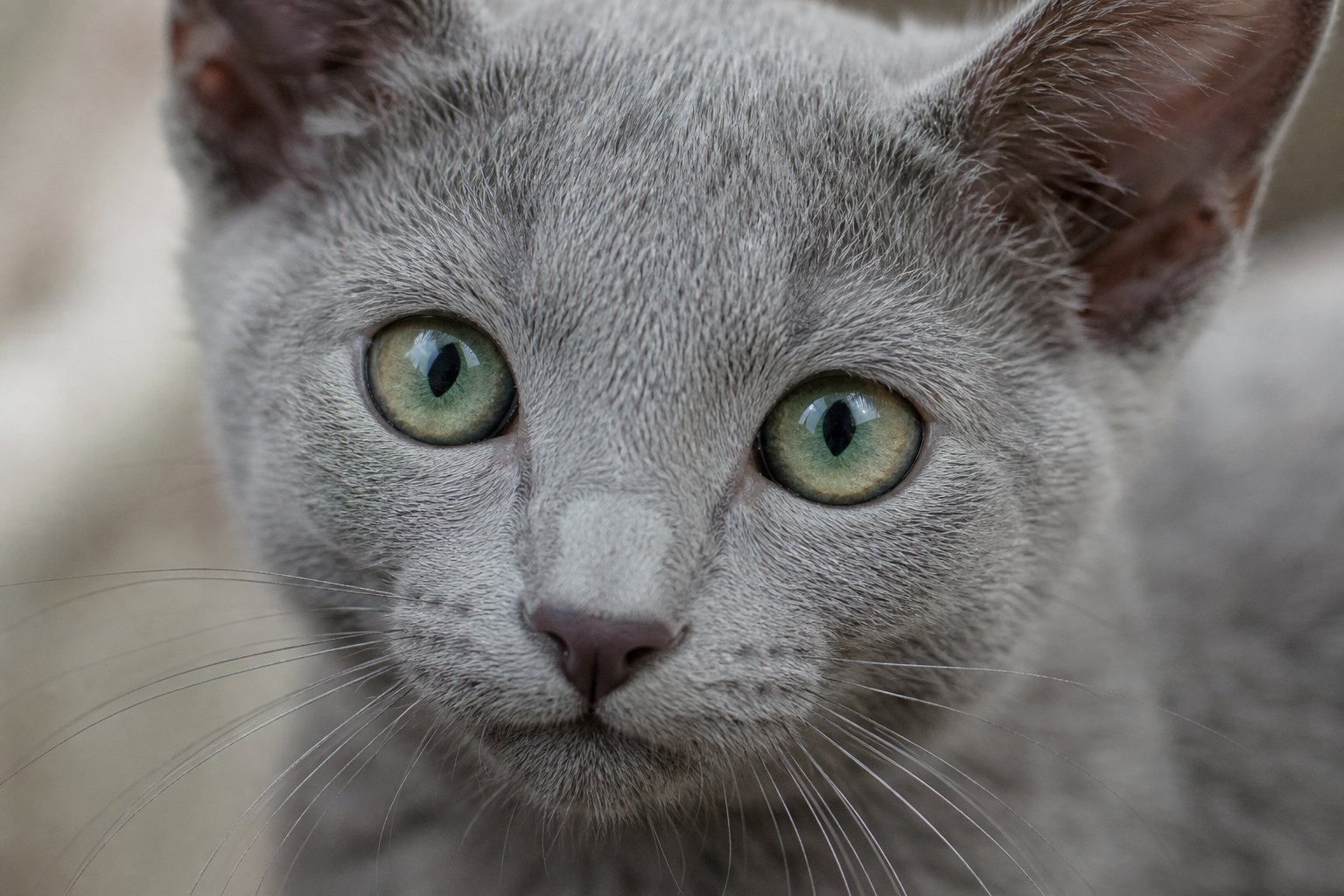
Russian Blue: fine-boned and elegant, with a short dense double coat, silver-tipped blue-grey fur and vivid green eyes. Typically quiet, gentle, reserved with strangers and deeply attached to their family.
British Shorthair: larger, rounder and heavier-boned, with a dense plush coat, broad face and copper or gold eyes. Typically calm, easygoing, affectionate without being demanding, and more independent.
Temperament
The clearest difference is sociability. British Shorthairs are generally more easygoing with visitors and less bothered by change. Russian Blues are more reserved with strangers and more sensitive to household stress, but bond very closely with their own people — many owners describe them as dog-like in their loyalty.
Both are calm, undemanding cats suited to apartments and families. See our Russian Blue temperament guide for the detail.
Grooming
Both are low-maintenance. Russian Blues need a weekly brush; British Shorthairs, with their denser coat, benefit from two or three brushes a week, particularly in shedding season. Our grooming guide covers the routine.
Size and presence
British Shorthairs are noticeably heavier and more solid. If you want a substantial, teddy-bear cat, that is the British. If you prefer elegance and lightness, the Russian Blue is the one.
Vocalisation
Russian Blues are famously quiet — one of their defining traits. British Shorthairs are also quiet, so both suit apartments and close neighbours well.
Which suits you?
Choose a Russian Blue if you want a close, loyal companion in a calm home, quiet company and minimal grooming. Choose a British Shorthair if you want a more easygoing, sturdy, independent cat who copes well with visitors and change.
If the Russian Blue sounds right, browse our available kittens or ask us a question.
Related Articles
Are Russian Blue Cats Hypoallergenic? Honest Answers
No cat is truly hypoallergenic, but Russian Blues are often easier for allergy sufferers. Here is why.
Russian Blue Temperament: What They’re Really Like
A realistic look at the Russian Blue personality — affectionate, reserved, playful and deeply loyal.
Are Russian Blues Good Family Cats?
An honest look at how Russian Blues fit into busy family life — with children, visitors, other pets and everyday noise.
Russian Blue vs British Shorthair: FAQs
How much does it cost to act on this?
When readers ask about russian blue vs british shorthair, the budget question comes first: our Russian Blue kittens are $2,500 with a $250 deposit, vet-checked and fully documented — see current Russian Blue kittens for sale.
Is a Russian Blue right for first-time owners?
Often yes — russian blue vs british shorthair shows they are gentle, clean and undemanding, though reserved at first. Read the first-timer’s assessment.
What should I do next about russian blue vs british shorthair?
Read our 99 kitten-buying FAQs, then enquire — we reply within 24 hours and will happily talk through russian blue vs british shorthair for your situation.
Can I see the kitten before deciding on russian blue vs british shorthair?
Yes — for russian blue vs british shorthair, we happily arrange video calls and share regular photo updates, so you can be fully confident before paying your $250 deposit. Just ask us.
Independent guidance: Compare breed profiles at TICA’s Russian Blue breed page alongside this guide.
Ready to Meet Your Kitten?
Every kitten from our cattery is vet-checked, F3 vaccinated, microchipped and wormed before leaving us, and comes with a complete health record and lifetime aftercare support.
View Available Kittens Our Adoption Process Ask Us a Question Read the FAQ